Home
Solutions
Products
Services
About
Careers

Preserving Tradition, Scaling Globally: How a 3rd Generation Kuthampally Handloom Business Transformed with ERPNext
About the Company
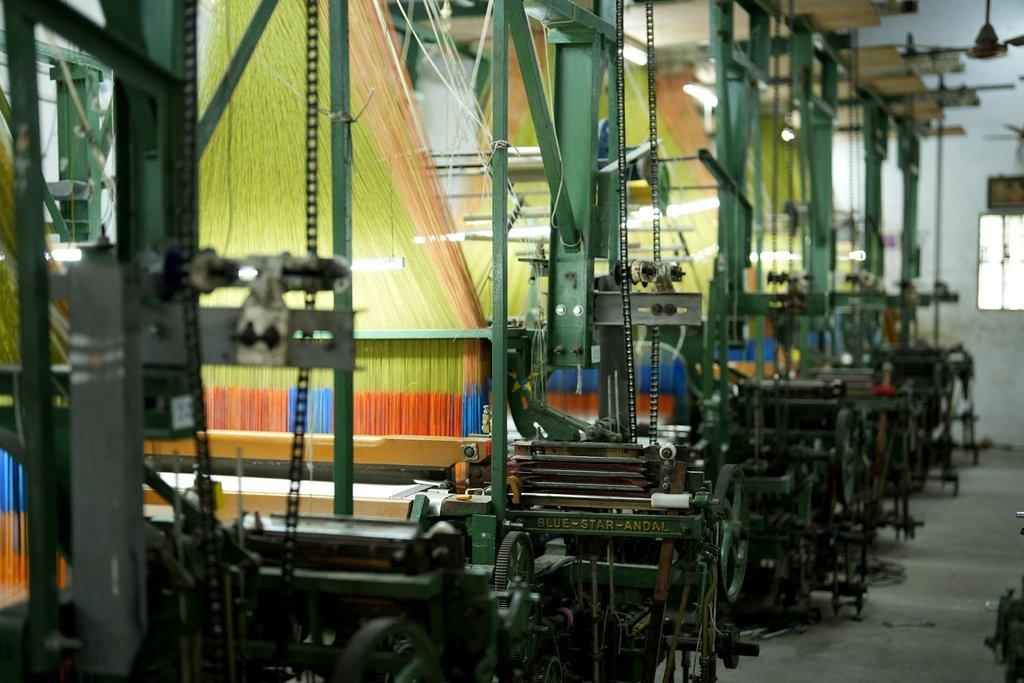
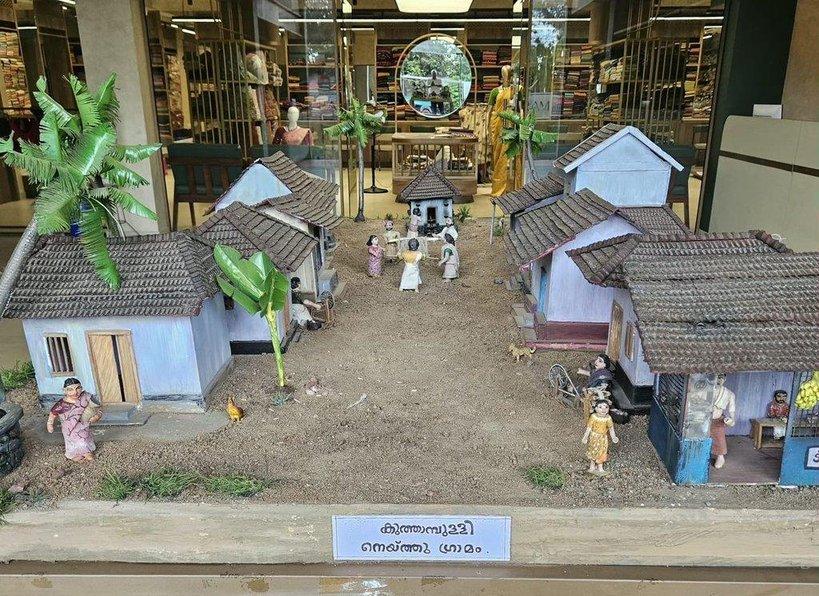
Nestled in Kerala, Kuthampally is deeply synonymous with the rich heritage of traditional handloom weaving. For generations, traditional families have dedicated their lives to weaving exquisite sarees, dhotis, and ethnic garments. One prominent family took this tradition a step further, transitioning from local weaving to distributing handwoven dhotis to retail shops across Kerala.
As the second generation built a vast distribution network for exclusive designer dhotis, the third generation set their sights even higher. They diversified the product portfolio, established retail storefronts right in the heart of Kuthampally, and formed a new firm dedicated to scaling the business globally. To support this modern, diversified retail and B2B distribution model, they knew they needed a robust, unified digital backbone from day one.
The Challenge
Handling the dynamic nature of the garment business requires granular control. As the company expanded into both wholesale distribution and direct-to-consumer retail, they faced several core operational hurdles:
- Complex SKU Management: Handloom garments involve huge SKU volumes with highly evolving attributes (sizes, colors, fabrics, and intricate designs).
- B2B Distribution Friction: Managing a growing network of field salespersons required real-time order tracking, credit limit enforcement, and streamlined handling of Post-Dated Cheques (PDCs). Sales reps lacked on-the-go visibility into pending payments and past distributor orders.
- Retail Floor Blind Spots: The retail chain required seamless integration of multiple payment methods, floor-level inventory tracking, and quick counter start/end reporting.
- Quality Control & Feedback: The management needed a way to track slow-moving vs. fast-moving items, capture granular customer feedback for floor merchandisers, and manage rigorous quality inspections to handle weaving rejections.
The Solution
Partnering with implementation experts Wahni IT Solutions, the company deployed a unified technological ecosystem built entirely around ERPNext, seamlessly connecting their back-office, retail fronts, and field operations.
1. ERPNext (The Back-End Core)
ERPNext was deployed as the central nervous system for all operations.
- Procurement & Quality Control: Complete mapping of Purchase Orders and Goods Receipt Notes (GRN). A rigorous Quality Inspection module was tied to the GRN, entirely streamlining the garment industry's notorious challenge of quality rejections and ensuring vendors were only paid for defect-free goods.
- Distribution Billing: End-to-end management of the purchase-to-distributor billing lifecycle.
2. NeuPOS (The Retail Front)
To empower the newly launched retail spaces, the company integrated NeuPOS with ERPNext.
- Omnichannel Billing: Handled complete online and offline billing, tracking inventory dynamically across various store floors.
- Integrated Payments: Quick reconciliation through unified integrations for Banks, UPI, and Credit Cards.
- Merchandiser Feedback: Implemented a checkout feedback mechanism that captures customer sentiment, helping management train and improve floor salespersons.
3. DISA (The Field Sales Engine)
To empower the B2B distribution arm, field sales personnel were equipped with DISA.
- On-the-Go Operations: Complete mapping of field reps from order-taking to material delivery and payment entry.
- Data at Their Fingertips: Salespersons now have real-time visibility into General Ledgers, past sales history, multiple price lists, and strict credit limit enforcement while on the road.
Mastering Complex SKUs and Dynamic Inventory
The Benefit: 100% accurate tracking of thousands of garment variations, enabling the business to identify fast-moving trends and eliminate dead stock without drowning in data entry.
How ERPNext Solves It:
- Item Templates and Variants: Instead of creating a unique, isolated item for every single product, ERPNext uses a parent-child structure. A user creates an "Item Template" (e.g., Traditional Kasavu Saree) and defines Item Attributes (e.g., Color, Border Width, Fabric Blend). ERPNext automatically generates the specific Item Variants (e.g., Kasavu Saree - Gold - 2 inch - Cotton).
- Multi-Level Warehousing: The system maps the physical reality of the business to the software. ERPNext allows the creation of hierarchical warehouses (e.g., Main Distribution Center $\rightarrow$ Retail Store A $\rightarrow$ Ground Floor Display). This allows management to see exactly where a specific size and color is sitting in real-time.
- Stock Ageing and Analytics: Built-in reports track the lifecycle of every SKU. Management uses the Stock Ageing Report to identify slow-moving traditional garments that tie up capital, and the Sales Analytics Report to double down on fast-moving designer dhotis.
Securing B2B Distribution and Field Operations
The Benefit: Eradication of bad debt, empowered field sales reps, and automated reconciliation of deferred payments (PDCs).
How ERPNext Solves It:
- Automated Credit Limits: In the Customer Master, ERPNext allows the setting of specific credit limits and credit terms (e.g., 30 days) for each retail distributor. If a field agent attempts to punch an order that pushes a distributor past their limit, the system automatically blocks the Sales Order or triggers a workflow requesting managerial approval.
- API-Driven Field Enablement (DISA Integration): Because ERPNext features a robust REST API, the DISA field app connects directly to the core database. Sales reps in the field fetch real-time stock levels (preventing orders for out-of-stock items) and access live General Ledgers. They can see exactly what the distributor ordered last month and their outstanding balance before pitching new products.
- Post-Dated Cheque (PDC) Management: ERPNext handles PDCs through its Payment Entry and Journal Entry systems. Cheques are recorded with future dates. The system flags them as pending and only impacts the actual cash/bank ledger when the cheque is physically cleared and reconciled on the due date.
Enforcing Procurement Quality Control
The Benefit: Zero financial leakage from paying for defective handloom weaves, and higher quality merchandise hitting the retail floor.
How ERPNext Solves It:
- Mandatory Quality Inspections: ERPNext forces a strict workflow between the loading dock and the accounting ledger. When a batch of dhotis arrives, a Purchase Receipt (GRN) is created. The system is configured to route these items to a temporary "Quality Control" warehouse.
- Actionable Inspection Criteria: The system generates a Quality Inspection document based on pre-defined criteria (e.g., thread count, dye consistency, stain checks).
- Payment Gatekeeping: If 100 dhotis arrive but 15 fail inspection, ERPNext only moves 85 into the "Available Stock" warehouse. Consequently, the automated Purchase Invoice generated for the vendor will only reflect the 85 accepted units, entirely automating dispute resolution and preventing overpayment.
Unifying the Retail Floor Experience
The Benefit: Frictionless checkout for customers, immediate financial reconciliation for the back office, and continuous improvement of floor staff.
How ERPNext Solves It:
- Omnichannel POS Profiles: The NeuPOS front-end syncs directly with ERPNext's Point of Sale profiles. These profiles are mapped to specific retail locations and user roles, ensuring counter opening and closing balances are logged accurately per shift.
- Unified Payment Gateways: ERPNext allows multiple Modes of Payment (Cash, UPI, Credit Card) within a single transaction. Each mode is mapped to its respective ledger account, meaning a split payment automatically balances the books without manual end-of-day math.
- Custom Fields for Merchandiser Feedback: ERPNext’s deeply customizable framework (DocTypes) allows the addition of custom data fields to the POS invoice. During checkout, cashiers can quickly log customer feedback directly onto the sales record. This data feeds into a custom dashboard, allowing management to track the performance and customer satisfaction of individual floor merchandisers.
The Impact
By migrating their operations to the ERPNext ecosystem, this multi-generational business successfully bridged the gap between traditional craftsmanship and modern retail efficiency.
- 100% Inventory Tracking: Complete visibility into fast and slow-moving items across warehouses, distribution centers, and retail floors.
- Reduced Financial Leakage: The integration of quality inspections at the GRN level successfully reduced unwanted payments against quality defects.
- Accelerated Workflows: Drastically reduced manual data entry time and ensured lightning-fast counter opening/closing for retail staff.
- Data-Driven Leadership: Real-time dashboards placed key metrics directly at the management's fingertips, enabling agile, pulse-of-the-market decision-making.
- A Single Source of Truth: One unified system—ERPNext, NeuPOS, and DISA—working in perfect harmony.
Client Testimony
"ERPNext has helped us streamline our wholesale textile operations, improve inventory and distribution management, and gain better control over our growing business. The system provides the scalability needed to expand our distribution network across Kerala and supports our future franchise plans for promoting traditional Kuthampally handloom products and exclusive designer dhotis worldwide. We appreciate the support and expertise provided by Wahni IT Solutions throughout the implementation."
— Prathapkumar Shanmugharaj, Managing Director