
Home
Solutions
Products
Services
About
Careers
Manage the Complete Lifecycle of Your Business Assets
ERPNext Asset Management helps businesses record, track and manage fixed assets from purchase and capitalisation through allocation, maintenance, depreciation and disposal. It provides clear visibility into the location, custodian, value and operating condition of assets while keeping the corresponding accounting entries connected with the asset lifecycle.
Asset Register
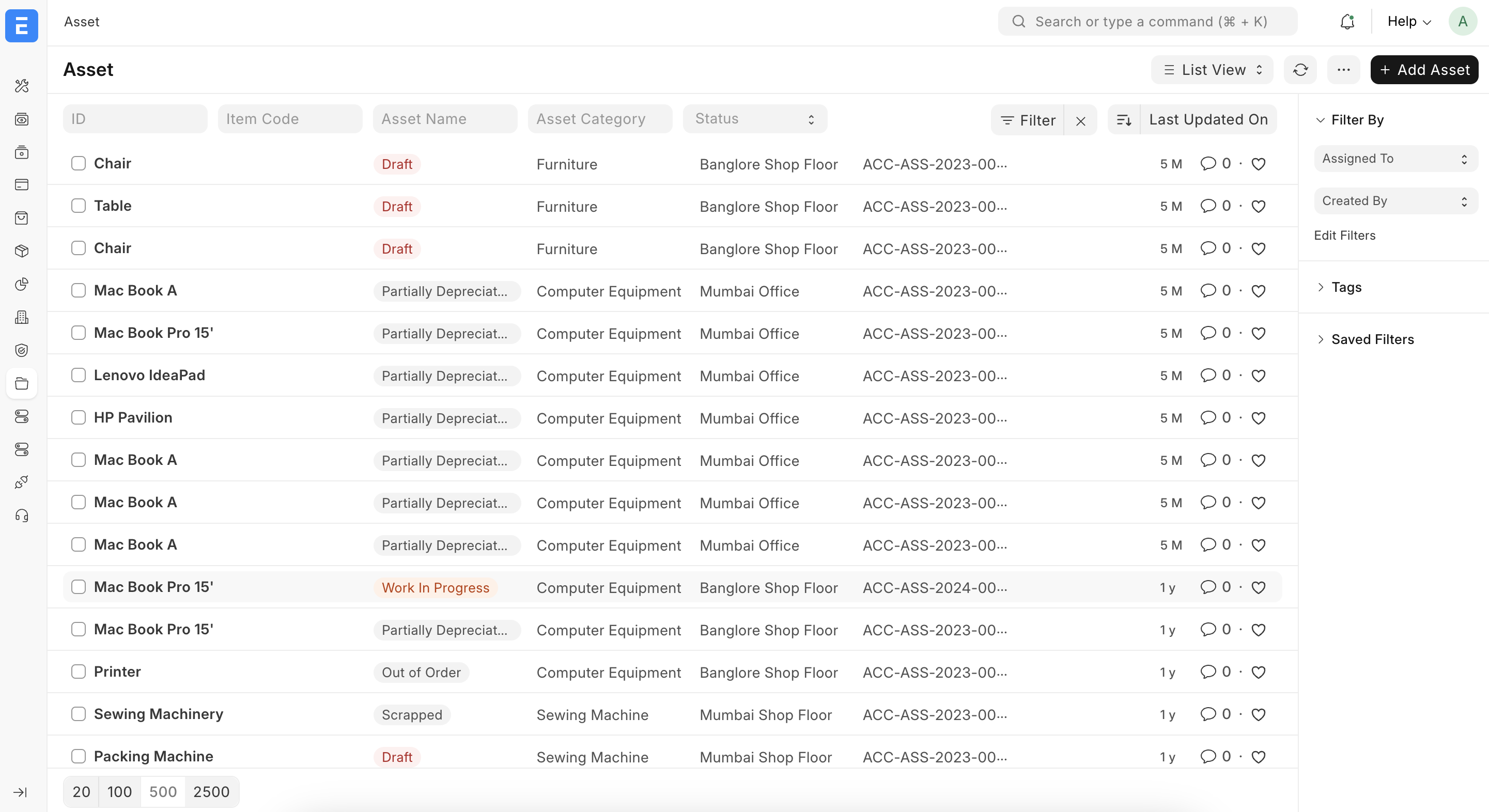
Create a Centralised Asset Register
Maintain complete details of machinery, vehicles, computers, furniture, equipment and other business assets.
Allocation
Track Asset Allocation and Movement
Know where each asset is located and who is responsible for it throughout its operational life.
Depreciation
Automate Depreciation
Configure depreciation rules and automatically generate schedules based on the organisation's accounting policies.
Maintenance
Plan Maintenance and Repairs
Schedule preventive maintenance and retain a complete history of services, repairs and downtime.
Disposal
Manage Capitalisation and Disposal
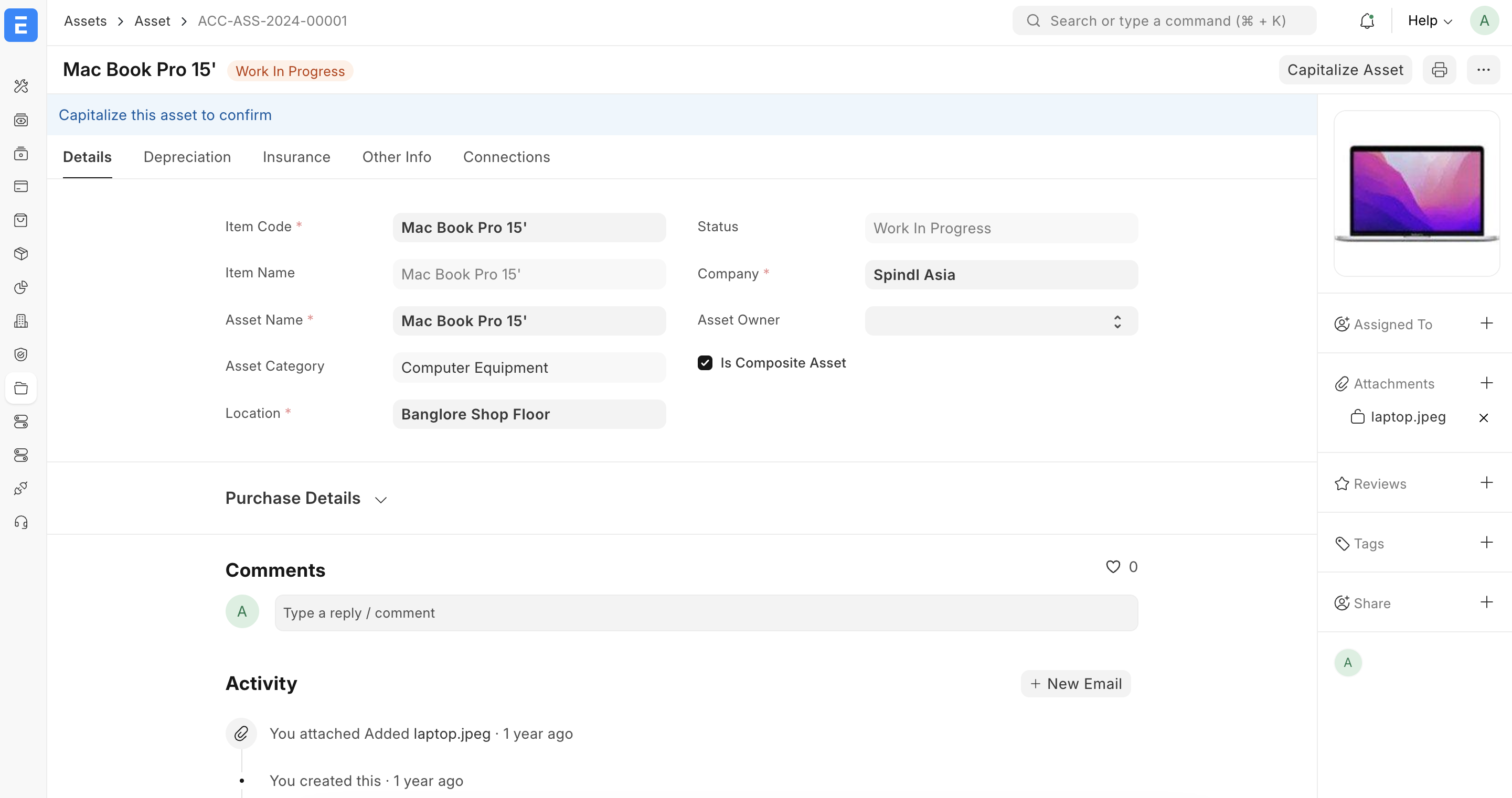
Handle asset value adjustments, composite asset capitalisation and final disposal through structured workflows.
At a Glance
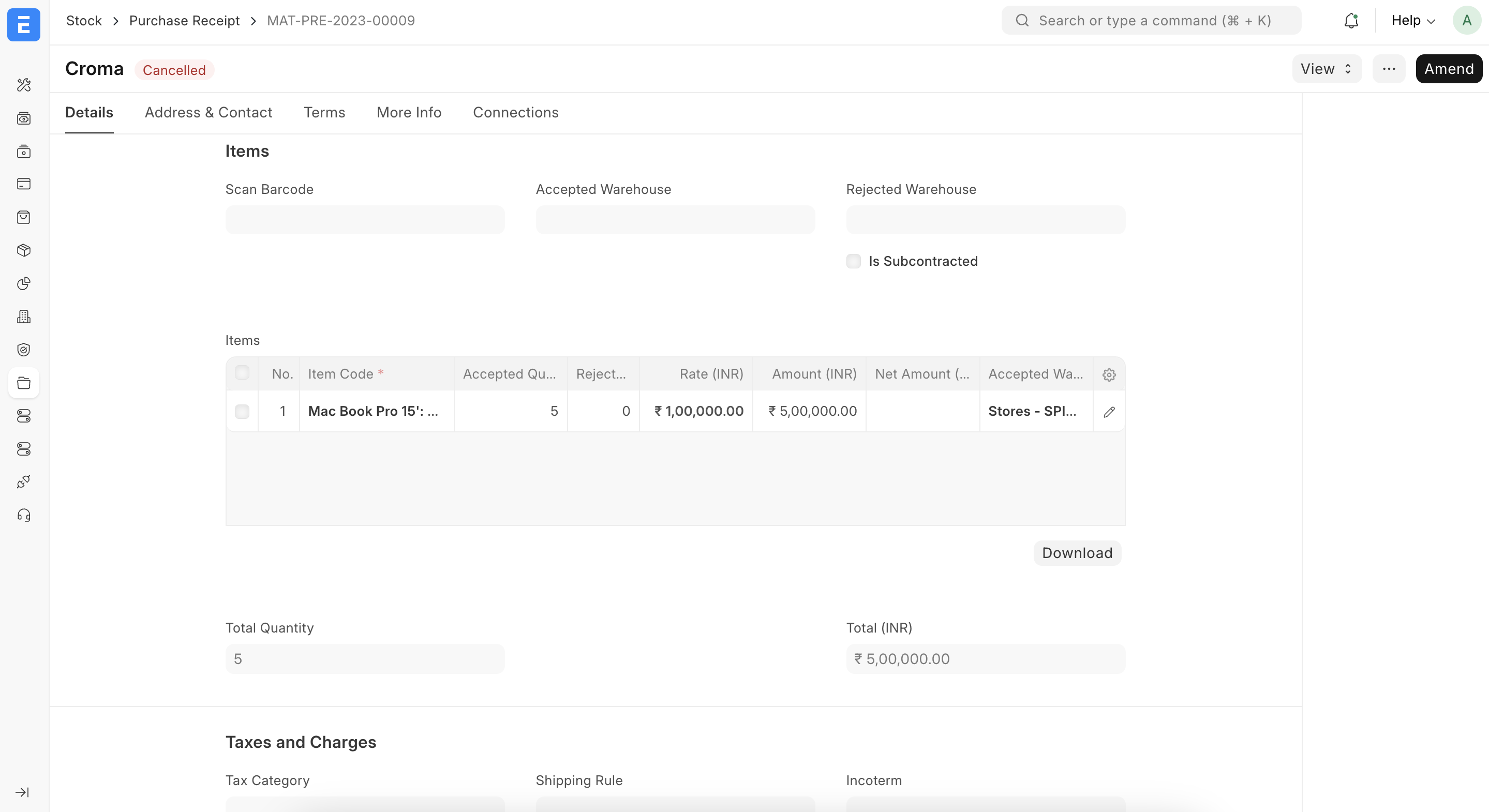
ERPNext connects each asset with its purchase value, location, custodian, depreciation schedule, maintenance history and eventual disposal.